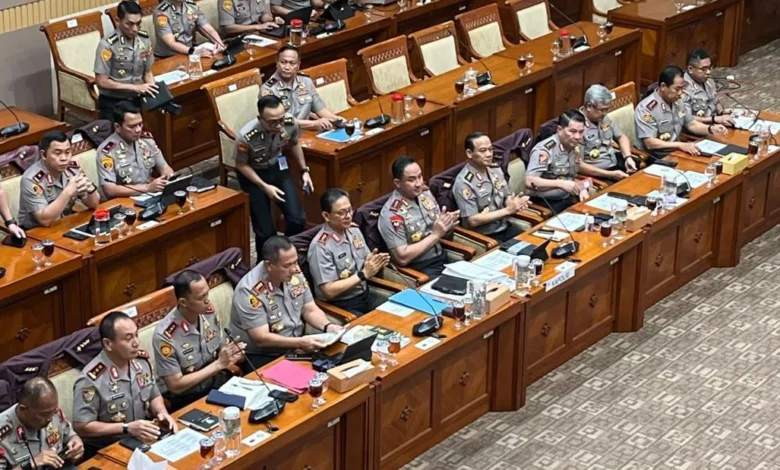
The political and institutional landscape of Indonesia was shaken to its core during a high-stakes hearing at the House of Representatives (DPR) complex in Senayan, Jakarta. Law enforcement officials revealed a monumental internal security breach involving the highest echelons of the Indonesian National Police (Polri). During a comprehensive working meeting with Commission III of the DPR on Thursday, November 12, 2026, the authorities laid bare an illegal wiretapping operation targeting none other than President Prabowo Subianto.
The gravity of the scandal intensified as investigators explicitly named former Chief of the Indonesian National Police, General Listyo Sigit Prabowo, as the primary beneficiary—or the ultimate "end user"—of the intercepted intelligence data. The disclosure has prompted widespread national debate regarding institutional overreach, the abuse of state surveillance apparatuses, and the checks and balances required within Indonesia’s supreme law enforcement agency.
Anatomy of an Illegal Surveillance Operation
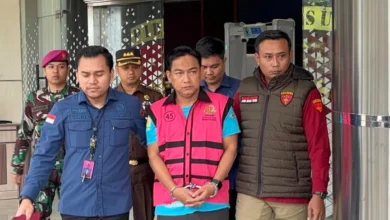
According to detailed briefings presented to Commission III, the internal investigation into the wiretapping scandal has officially designated four high-ranking police figures as suspects. The accused individuals include former Kapolri General Listyo Sigit Prabowo, former Head of the Information and Communication Technology Division (Kadiv TIK) Inspector General Slamet Uliandi, former Acting Head of Monitoring (Plt Kabagmon) Inspector General Eko Hadi Santoso, and Ahrie Sonta, a former police officer who has since been dishonorably discharged from the force.
Investigators outlined a meticulously structured hierarchy of command and execution behind the illicit operation. Each suspect allegedly played a distinct, coordinated role in initiating, approving, executing, and subsequently covering up the unauthorized surveillance activities directed at the nation’s chief executive.
The revelation underscores profound vulnerabilities within sensitive state intelligence and monitoring infrastructures. Unauthorized wiretapping against a sitting head of state represents an unprecedented breach of national security protocols, prompting immediate calls from lawmakers for structural reforms and rigorous oversight mechanisms within Polri’s specialized technological divisions.
Detailed Breakdown of Suspect Roles and Command Structure
The presentation by law enforcement before Commission III mapped out the specific responsibilities borne by each of the four suspects during the period the surveillance took place. The investigative findings paint a picture of a bypassed legal framework, where standard protocols requiring formal investigative requests were systematically ignored in favor of informal directives.
At the apex of the operation sat General Listyo Sigit Prabowo. Investigators established that during his tenure as the Chief of Police, Listyo allegedly dictated surveillance targets directly. These orders were reportedly transmitted either verbally or via encrypted messaging applications, specifically WhatsApp, bypassing standard bureaucratic paper trails. As the ultimate recipient of the intelligence, Listyo functioned as the primary end user of the intercepted data, directing subordinates to execute actions that fell well outside lawful parameters.
The second key figure identified in the conspiracy is Inspector General Slamet Uliandi, who served as the Head of the TIK Division from 2021 through October 2026. Within the monitoring framework, Slamet acted in an advisory capacity as a senior member of the Polri Monitoring Center. Investigators revealed that he provided institutional approval for the wiretapping operations and regularly funneled daily intelligence reports and analytical summaries directly to Listyo.
The execution phase of the conspiracy involved Inspector General Eko Hadi Santoso, who served as the Acting Head of Monitoring between December 2024 and October 2025. Eko reportedly received direct instructions from Slamet—originating from Listyo—to target specific individuals. Despite holding a senior monitoring post, Eko allegedly authorized the wiretapping operations via informal WhatsApp communications, entirely omitting the mandatory formal requests typically required from authorized investigators.
The operational bridge between leadership and field execution was managed by Ahrie Sonta, who held the position of Acting Head of Monitoring from October 2025 until October 2026. Ahrie allegedly translated Listyo’s verbal directives into actionable commands for technical operators. Furthermore, Ahrie was responsible for transmitting the finalized intelligence products back to Listyo while simultaneously deploying personnel to conduct physical surveillance operations.
Cover-Up Efforts and Evidence Destruction
As investigative scrutiny intensified, the conspirators reportedly attempted to erase digital footprints and dismantle the communication networks utilized during the operation. Testimony presented to Commission III highlighted deliberate actions taken to obstruct justice and conceal the origins of the unauthorized surveillance.
Ahrie Sonta was specifically implicated in orchestrating the cover-up phase. Beyond directing field surveillance, Ahrie allegedly ordered technical subordinates to wipe all voice recordings, digital logs, and data files harvested from the illegal wiretaps. In an effort to sever the chain of digital evidence connecting the operatives to the former police chief, instructions were also given to dissolve the dedicated WhatsApp groups used to coordinate the targets, issue commands, and share intercepted intelligence.
These systematic attempts at evidence destruction have formed the basis for additional obstruction charges against the suspects. Cybersecurity experts and legal analysts observing the proceedings noted that the digital forensics teams faced significant hurdles recovering wiped data, underscoring the sophisticated nature of the cover-up attempted by seasoned intelligence and technology officials within the police force.
Parliamentary Reactions and Institutional Implications
The disclosure at the House of Representatives triggered immediate, sharp reactions from legislators across various political factions represented in Commission III. Lawmakers expressed profound shock that a state intelligence apparatus could be weaponized against the head of state, raising existential questions regarding the autonomy and accountability of the national police force.
Members of the parliamentary commission emphasized that wiretapping is an extraordinary legal instrument reserved strictly for combating severe crimes under stringent judicial and administrative safeguards. The circumvention of these safeguards by top-tier law enforcement officials has been characterized as a direct threat to democratic governance and the rule of law.
In response to the testimonies, several legislators called for a comprehensive audit of all specialized monitoring centers operating under the auspices of Polri. Lawmakers stressed the urgent need to establish independent oversight bodies capable of auditing digital surveillance capabilities to prevent future abuses of power. The scandal has also reignited legislative debates surrounding proposed amendments to laws governing state intelligence, electronic information, and police accountability.
Broader Context of Police Reform in Indonesia
This unprecedented case arrives at a delicate juncture for the Indonesian National Police, an institution that has faced persistent public scrutiny regarding internal discipline, human rights compliance, and institutional transparency. Over recent years, civil society organizations and legal watchdogs have repeatedly voiced concerns over the expansion of state surveillance technologies and the relative lack of judicial oversight governing their deployment.
The involvement of a former Chief of Police in an illegal wiretapping operation targeting the president represents a watershed moment for Indonesian institutional history. Legal scholars point out that prosecuting high-ranking security officials sets a crucial precedent demonstrating that no individual, regardless of rank or past authority, remains above the law.
As the legal proceedings progress, the case is expected to catalyze broader institutional reforms within Polri. Observers suggest that the scandal will likely compel the current leadership to overhaul internal compliance protocols, restrict unauthorized access to monitoring centers, and re-establish strict adherence to statutory authorization procedures for all investigative and intelligence-gathering operations.
Next Steps in the Judicial Process
With the legislative phase of the inquiry concluding its initial public disclosures, the focus now shifts entirely to the judicial system. The dossier compiled by investigators will be prepared for formal prosecution, setting the stage for high-profile courtroom trials for all four designated suspects.
Legal experts anticipate that the defense teams will challenge the admissibility of digital evidence and the interpretations of command responsibility presented by the state. Meanwhile, prosecutors are tasked with solidifying the evidentiary chain—recovering deleted logs, corroborating digital communications, and establishing clear intent and causation linking the directives issued by General Listyo Sigit Prabowo to the execution of the illegal wiretaps.
The unfolding legal battle promises to remain at the forefront of national headlines, serving as a defining test of Indonesia’s judicial independence, institutional accountability, and commitment to upholding the rule of law at the highest levels of government.