Dynamics of Change and Continuity: Analyzing the Historical Evolution of the Indonesian Archipelago

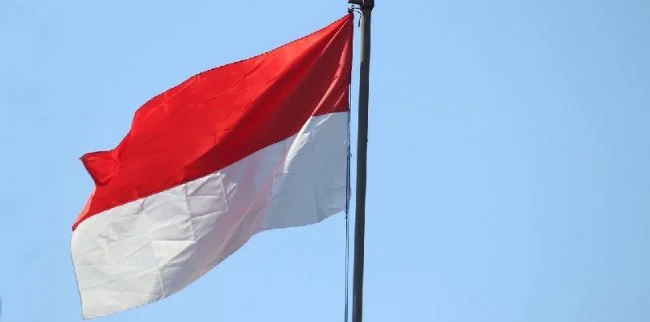
The Indonesian archipelago, a vast mosaic of over 17,000 islands, serves as a compelling case study in the tension between transformative change and deep-rooted continuity. Its history is not merely a sequence of dates but a complex layering of indigenous systems, colonial impositions, revolutionary fervor, and democratic maturation. By examining the structural shifts in governance, economics, and social norms alongside the preservation of cultural identities, one gains a clearer understanding of how Indonesia has navigated the currents of global history to maintain its sovereign character.
The Colonial Epoch: A Catalyst for Structural Transformation
The arrival of European maritime powers in the early 16th century—beginning with the Portuguese and followed by the Dutch East India Company (VOC)—marked the inception of a profound socio-economic shift. The primary motivation for these colonial entities was the extraction of high-value spices, particularly cloves, nutmeg, and mace, which were in high demand in European markets.
The change was foundational: the transition from a network of autonomous maritime kingdoms and agrarian sultanates to a centralized colonial bureaucracy. This era introduced the plantation system, which fundamentally altered land use and labor dynamics. By the 19th century, the implementation of the Cultivation System (Cultuurstelsel) forced Javanese peasants to dedicate land to export crops, causing widespread famine and economic displacement.
However, historical continuity remained remarkably resilient. Despite the introduction of Christianity and the legal frameworks of the Dutch East Indies, the core societal structure, particularly in rural areas, remained tethered to traditional adat (customary law). Village governance, social hierarchies, and animistic belief systems often persisted under the surface of colonial administration. The dual nature of this period—an administrative superstructure imposed from above, contrasted with the enduring traditional life below—set the stage for the later development of the Indonesian nationalist consciousness.
The Crucible of Revolution: 1945–1949
The period between 1945 and 1949 stands as the most critical juncture in modern Indonesian history. Following the Japanese occupation during World War II, the vacuum of power allowed for the proclamation of independence on August 17, 1945. This was not merely a military rebellion; it was an ideological transformation.
The revolution unified disparate ethnic and religious groups under the banner of "Bhinneka Tunggal Ika" (Unity in Diversity). Yet, the success of the revolution relied heavily on a paradox of continuity. The leadership—figures like Sukarno and Mohammad Hatta—utilized the organizational structures of the pre-war nationalist movements to mobilize the masses. The revolution succeeded because it harnessed existing social networks, including Islamic organizations and youth militias, to challenge the Dutch return. This period demonstrated that true systemic change often requires the repurposing of existing institutional knowledge to forge a new national identity.
The 1998 Reformation: A Pivot to Democracy
The collapse of the New Order regime in May 1998 represents the most significant political pivot in the post-independence era. After 32 years of centralized, authoritarian rule under President Suharto, the Asian Financial Crisis acted as a trigger for widespread public unrest. The subsequent resignation of Suharto led to the Reformasi era, a transition characterized by radical decentralization and political liberalization.
The implications were profound: the establishment of the Constitutional Court, the implementation of direct presidential elections, and the expansion of freedom of the press. Data from the World Bank and various democratic indices show that during this period, Indonesia transitioned from a consolidated autocracy to the largest democracy in Southeast Asia. This shift was essential in preventing the potential fragmentation of the archipelago, as decentralization allowed local regions more control over their resources and governance, effectively balancing the demands of diverse provinces with the necessity of a unified state.
Economic Trajectories: From Agriculture to Global Tourism
Indonesia’s economic history reflects a persistent move toward integration with the global market. Historically, the nation relied heavily on subsistence agriculture and raw material exports. Today, the service sector, particularly tourism, has become a cornerstone of the national economy.
The rise of the tourism industry, notably in Bali and later in regions like Labuan Bajo and Mandalika, has generated significant revenue. According to statistics from the Indonesian Ministry of Tourism and Creative Economy, tourism contributed approximately 4.1% to the national GDP prior to the pandemic, with projections indicating a return to pre-2019 levels.
However, this growth highlights the friction between economic change and environmental/cultural continuity. The "over-tourism" phenomenon has raised concerns regarding the degradation of natural landscapes and the erosion of local cultural practices. The current governmental approach seeks to balance this through "Quality Tourism," which emphasizes sustainable development and the preservation of heritage sites, suggesting an attempt to institutionalize the protection of tradition as a strategic economic asset.
The Digital Revolution and Cultural Preservation
The rapid penetration of internet and mobile technologies in the 21st century has acted as an accelerator for both change and continuity. Indonesia boasts one of the highest internet penetration rates in Southeast Asia, with over 210 million users as of recent reports. This digital shift has democratized access to information and enabled the growth of a robust startup ecosystem, contributing to the nation’s status as a burgeoning digital economy.
Yet, this technological advancement has simultaneously served as a mechanism for cultural preservation. Traditional art forms—such as Wayang Kulit, Gamelan, and Batik—which were once confined to local spheres, now enjoy global visibility through digital platforms. Younger generations are utilizing social media to document and revitalize indigenous languages and practices that were previously at risk of fading. This represents a modern form of continuity: the tools of the future are being employed to safeguard the artifacts of the past.
Global Integration and the Maintenance of Sovereignty
The modern Indonesian state occupies a unique position in the global order, characterized by active participation in multilateral forums such as the G20 and ASEAN. The nation’s strategic geography, straddling the crossroads of the Indian and Pacific Oceans, makes it a pivotal player in regional security and trade.
The shift toward global integration has forced Indonesia to adapt its internal policies to meet international standards of trade and human rights. This has led to a more pluralistic society, where international influences are synthesized with local values. Analysts note that Indonesia’s ability to participate in the global community without sacrificing its core national identity—often defined by the Pancasila state philosophy—is its greatest diplomatic asset.
Implications for Future Development
The historical trajectory of Indonesia illustrates that change is rarely a process of total replacement; rather, it is an evolutionary process where new structures are built upon the foundations of the old. The implications for the future are twofold:
- Institutional Resilience: The stability of Indonesia’s future depends on its ability to uphold the democratic reforms of 1998. Protecting the independence of the judiciary and the freedom of the press remains essential to preventing backsliding into authoritarianism.
- Cultural Sustainability: As the nation continues to modernize, the challenge will be to ensure that economic progress does not come at the expense of cultural diversity. The preservation of local traditions is not merely a nostalgic endeavor but a crucial component of national stability.
In conclusion, Indonesia’s history is a testament to the endurance of its people. From the early trade networks that defined its maritime dominance to the digital connectivity of the 21st century, the nation has consistently demonstrated an ability to absorb foreign influences while maintaining a distinct, sovereign identity. By understanding the interplay between the pressures of change and the strength of its traditions, Indonesia continues to navigate the complexities of the modern era, securing its place as a rising power on the global stage. The story of Indonesia is an ongoing narrative, one where the past provides the stability required to embrace the uncertainty of the future.