Exploring the Animal Kingdom: An In-Depth Look at Species Starting with the Letter F

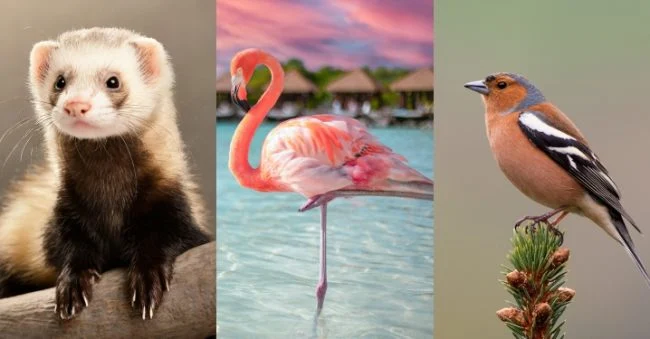
The classification of the natural world through alphabetical categorization serves as an essential educational tool for developing cognitive frameworks in children and adults alike, fostering a deeper appreciation for biodiversity and ecological nuances. Among the vast array of species inhabiting the Earth, those beginning with the letter "F" represent a diverse spectrum of biological complexity, ranging from the highly adaptive Fennec Fox of the Sahara to the lethal, specialized Fugu fish of the Pacific. By analyzing these creatures, we gain insight into evolutionary strategies, habitat specialization, and the ongoing conservation challenges posed by environmental degradation.

The Evolutionary Resilience of Fennec Foxes and Flying Squirrels
The Fennec Fox (Vulpes zerda) serves as a primary case study for extreme environmental adaptation. Native to the arid regions of North Africa, this nocturnal mammal possesses distinctive physical traits that have evolved over millennia to facilitate survival in high-temperature climates. Their ears, which can reach lengths of up to 15 centimeters, serve a dual purpose: the detection of subterranean prey movement and the dissipation of excess body heat through extensive vascularization. Data from zoological surveys indicate that while the global population remains stable, increasing desertification and human encroachment into the Sahara pose long-term risks to their habitat stability.

Similarly, the Flying Squirrel (Pteromyini) demonstrates a specialized form of locomotion. Contrary to popular misconception, these rodents do not engage in powered flight. Instead, they employ a patagium—a membrane of skin extending from the forelimbs to the hindlimbs—to glide between arboreal canopies. This adaptation allows them to traverse large distances in forest ecosystems with minimal energy expenditure, an essential strategy for nocturnal foraging in environments such as the temperate forests of North America and the tropical regions of Southeast Asia.

Avian Wonders: The Mechanics of Falconry and Flamingo Physiology
Among the most remarkable avian species starting with the letter "F" are the Falcon (Falconidae) and the Flamingo (Phoenicopteridae). The Falcon stands as a pinnacle of predatory evolution. Scientific monitoring of the Peregrine Falcon has confirmed its status as the fastest member of the animal kingdom; during its high-speed hunting dive, known as a "stoop," it can reach velocities exceeding 386 km/h (240 mph). This feat of biomechanics relies on specialized nictitating membranes and nasal tubercles that allow the bird to breathe at extreme speeds without sustaining lung damage.

In contrast, the Flamingo provides a fascinating look at the intersection of diet and phenotypic expression. Flamingos are born with gray or white plumage; their iconic pink hue is the result of carotenoid-rich diets, consisting primarily of brine shrimp and blue-green algae. If a flamingo’s diet were to change, its color would gradually fade. Furthermore, their habit of standing on one leg has been the subject of extensive biomechanical research, which suggests that this posture is a passive mechanism for heat regulation and muscle conservation, allowing the birds to maintain stability with minimal muscular effort.

Specialized Predators and Marine Biodiversity
The Fosa (Cryptoprocta ferox) of Madagascar represents a critical component of the island’s unique, isolated ecosystem. As the largest carnivore native to the region, the fosa has evolved to exploit an arboreal niche. With semi-retractable claws and highly flexible ankles, it is one of the few predators capable of descending tree trunks head-first. Its role as the primary predator of lemurs underscores its ecological importance. However, with an estimated population of fewer than 10,000 individuals, the fosa is currently classified as vulnerable, facing significant threats from habitat fragmentation due to agricultural expansion.

The marine environment also hosts unique "F" species, most notably the Flounder (Bothidae) and the Fugu (Tetraodontidae). The Flounder is a master of evolutionary camouflage. As these fish mature, they undergo a dramatic anatomical transformation wherein one eye migrates to the other side of the skull, allowing the fish to lay flat on the seabed while maintaining a field of vision. This morphological change is a rare example of extreme cranial asymmetry in vertebrates. Conversely, the Fugu, or pufferfish, presents a public health paradigm. The fish contains tetrodotoxin, a potent neurotoxin that is significantly more lethal than cyanide. In Japan, the preparation of fugu is strictly regulated; only chefs who have completed years of specialized training and hold government-issued licenses are permitted to prepare the fish for human consumption, ensuring that the toxic viscera are removed with surgical precision.

Taxonomic Diversity: Salamanders, Ferrets, and Finches
The Fire Salamander (Salamandra salamandra) offers a lesson in aposematism, or warning coloration. The species’ vibrant yellow-and-black patterns serve as a visual signal to predators, indicating the presence of toxic skin secretions. These amphibians are long-lived, with some individuals in captivity reaching the age of 50 years. Recent field studies, however, have raised concerns regarding the spread of the Batrachochytrium salamandrivorans fungus, which threatens salamander populations across Europe, illustrating the vulnerability of even well-defended species to emerging pathogens.

The Ferret (Mustela furo) and the Finch (Fringillidae) highlight the adaptability of smaller mammals and birds. The European Ferret, a member of the Mustelidae family, has been domesticated for centuries, yet its wild counterparts exhibit highly specialized hunting behaviors, utilizing elongated, flexible bodies to pursue burrowing rodents. Meanwhile, the study of Darwin’s Finches remains a cornerstone of modern evolutionary biology. These birds exhibit unique vocalizations, or "song prints," that are passed down through generations, serving as a primary mechanism for mate selection and species identification.

Broader Implications and Conservation Status
The diversity of animals beginning with the letter "F" spans multiple classes—mammals, birds, fish, and amphibians—each playing a vital role in their respective ecosystems. When assessing these species, biologists look at the "Red List" criteria established by the International Union for Conservation of Nature (IUCN). Species such as the fosa and certain populations of flying squirrels face direct threats from human-induced environmental shifts.

The implications of biodiversity loss among these groups are profound. For example, the decline of the Flying Fox (Pteropus), a critical pollinator and seed disperser, could lead to the collapse of specific forest structures in Southeast Asia. Similarly, the loss of predatory species like the fosa could trigger a trophic cascade, leading to the overpopulation of herbivorous lemurs, which would subsequently deplete local flora.

Chronology of Scientific Understanding
The study of these species has evolved significantly over the last two centuries:

- 1830s: Charles Darwin’s observations of finches in the Galápagos Islands laid the groundwork for the theory of natural selection.
- 1950s–1970s: Advances in ornithological tracking allowed scientists to accurately measure the velocity of falcons, confirming their status as the world’s fastest animals.
- 1990s–Present: Conservationists have shifted focus toward habitat protection for endemic species like the fosa, recognizing that protecting a single predator requires the preservation of its entire ecological support system.
Conclusion
From the rapid stoop of the falcon to the complex neurotoxic defenses of the fugu, the animals of the "F" category exemplify the ingenuity of evolutionary adaptation. These species do not exist in isolation; they are integral threads in the global biological tapestry. Understanding their behaviors, dietary requirements, and current conservation statuses is not merely an academic exercise but a necessity for informed environmental stewardship. As global temperatures rise and habitats diminish, the survival of these species remains a key indicator of our planetary health, demanding continued monitoring, research, and robust international cooperation in wildlife protection efforts. By recognizing the intrinsic value of each creature—from the smallest finch to the most elusive forest predator—society takes a critical step toward preserving the biological wealth of the natural world.