Lisa Rinna Earns Kylie Jenner’s Approval After Copying Her Iconic Look for Halloween in an Uncanny Transformation

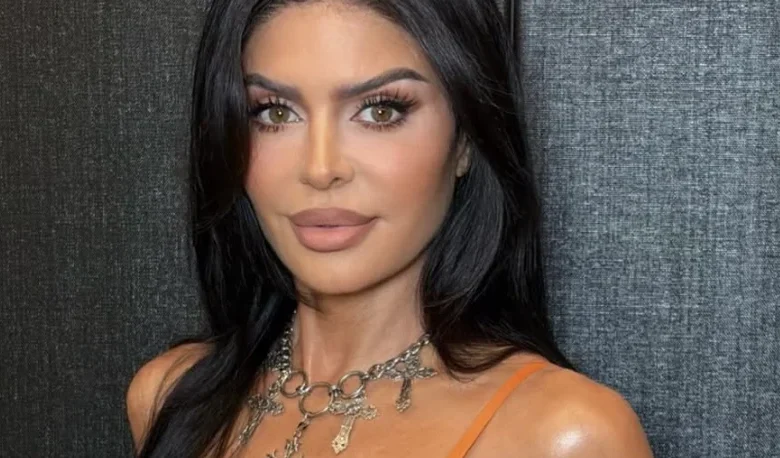
The intersection of classic reality television royalty and modern beauty mogul culture produced one of the most talked-about moments of the Halloween season, as veteran actress and television personality Lisa Rinna delivered a Halloween costume so precise that it momentarily deceived its very inspiration. Lisa Rinna, renowned for her decades-long tenure in the entertainment industry and her fearless approach to fashion, captured global media attention by recreating one of Kylie Jenner’s most memorable high-fashion red carpet appearances. The transformation was executed with such meticulous attention to detail that Kylie Jenner herself publicly confessed to a momentary double-take upon encountering the imagery on social media.
This viral moment highlights the enduring cultural impact of celebrity fashion emulation, the power of digital platforms in bridging generational divides within pop culture, and the sophisticated artistry involved in modern costume design. What began as a playful holiday homage quickly evolved into a cross-generational internet phenomenon, demonstrating how contemporary celebrity style is archived, celebrated, and reinterpreted by peers within the entertainment ecosystem.
Anatomy of an Uncanny Recreation
The centerpiece of Lisa Rinna’s viral Halloween presentation was a note-for-duplicate recreation of an ensemble originally worn by Kylie Jenner. The outfit in question was a custom-designed creation by the luxury gothic-streetwear brand Chrome Hearts. Jenner had initially debuted the gown during a high-profile public appearance in December 2025, when she attended the premiere of the critically discussed film Marty Supreme, accompanied by actor Timothée Chalamet. The original garment—a striking, form-fitting orange dress featuring daring abdominal cutouts—demanded a distinct physical silhouette and an attitude of unapologetic glamour to pull off successfully.
Rinna approached the replication not merely as a costume, but as a high-fashion study. To achieve the aesthetic likeness of the twenty-something billionaire and beauty mogul, the 63-year-old former soap opera star donned a sleek, waist-length dark wig that mirrored Jenner’s signature voluminous tresses. Her makeup artist utilized heavy contouring and a dramatic smokey eye technique to replicate Jenner’s preferred glam aesthetic. The look was punctuated by an oversized silver crucifix necklace, matching the exact statement accessory that Jenner had used to anchor the original red carpet look nearly a year prior.
The Chronology of a Viral Sensation
The rollout of the costume followed a carefully timed digital strategy typical of major cultural figures during the peak of the Halloween holiday period.
On October 30, 2026, Lisa Rinna utilized her official Instagram account to publish a carousel of high-resolution studio photographs showcasing the completed transformation. The post was accompanied by a caption reading "King Lisa," a clever bilingual and cross-generational wordplay. The phrasing served a dual purpose: it nodded to her own assertive persona while directly referencing the "King Kylie" era—a cultural zenith from the early 2010s when Jenner popularized a distinct aesthetic defined by vibrant hair extensions, over-lined lips, and edgy street style that heavily influenced a generation of beauty consumers.
Within hours of publication, the images began circulating across secondary platforms including X (formerly Twitter), TikTok, and dedicated fashion watchdog accounts. The rapid distribution of the photos brought the post to the attention of the Kardashian-Jenner inner circle, culminating in a direct digital interaction from Jenner herself within the comment section of Rinna’s original post.
The Kardashian-Jenner Factor and Public Reaction
The defining moment of the digital interaction occurred when Kylie Jenner, scrolling through her feed, encountered the uncanny images. Taken aback by the fidelity of the costume, Jenner left a public comment that quickly amassed tens of thousands of likes from amused fans and followers. "Awalnya kukira ini benar-benar aku," or translated to English in spirit and execution, the sentiment expressed sheer disbelief: "At first, I thought this was actually me."
Jenner’s humorous concession added an authentic layer of celebrity endorsement to the homage. In an industry where public figures frequently guard their intellectual property, personal brand aesthetics, and stylistic trademarks closely, Jenner’s lighthearted reaction demonstrated a healthy willingness to participate in self-referential internet culture.
Industry analysts and fashion commentators quickly weighed in on the success of the partnership-in-spirit. While celebrity Halloween costumes often rely on exaggerated prosthetics or comedic elements, Rinna’s approach belonged to a sophisticated sub-genre of imitation: the high-fashion impersonation. By selecting an archival look from less than a year prior rather than a classic cinematic or historical figure, Rinna acknowledged the accelerated lifecycle of modern fashion trends, where a red carpet look from twelve months ago can already be considered vintage pop-culture iconography.
Contextualizing the Figures: Lisa Rinna and Kylie Jenner
To fully appreciate the cultural resonance of this digital exchange, one must examine the distinct yet overlapping trajectories of the two women involved.
Lisa Rinna has maintained a visible presence in American pop culture for over three decades. Rising to fame through her work on daytime soap operas such as Days of Our Lives and Melrose Place, she later transitioned into reality television as a central cast member on The Real Housewives of Beverly Hills (RHOBH). Throughout her career, Rinna has consistently weaponized her public persona, leaning into fashion risks, self-deprecation, and viral television moments. Her transition into a high-fashion darling in her sixties—frequently walking runways for independent designers and attending European fashion weeks—has established her as an unexpected style icon for mature women.
Kylie Jenner, conversely, represents the digital-native apex of celebrity culture. As the youngest member of the Kardashian-Jenner family, Jenner leveraged her personal social media following to build Kylie Cosmetics, a multi-million-dollar beauty empire, before expanding into high-fashion partnerships with houses like Jean Paul Gaultier, Schiaparelli, and Chrome Hearts. Jenner’s style evolution—from the trendsetting "King Kylie" days of her adolescence to her current status as a minimalist luxury fixture—serves as a comprehensive case study in modern brand management.
When Rinna styled herself as Jenner, it represented more than a simple holiday gag; it served as a symbolic bridging of eras. It connected the foundational era of 1990s and 2000s television stardom with the current epoch of hyper-monetized, algorithm-driven social media celebrity.
Broader Implications for Celebrity Branding and Fashion Archiving
The viral success of "King Lisa" sheds light on several shifting paradigms within the entertainment and fashion industries.
First, it underscores the decreasing shelf-life of fashion moments. In the pre-digital era, archival fashion referenced garments from decades past—Yves Saint Laurent from the 1970s or Thierry Mugler from the 1980s. Today, digital saturation means that a custom Chrome Hearts dress worn in December 2025 can be treated as historical pop-culture artifact by October 2026. The velocity at which contemporary red-carpet moments pass into the lexicon of meme culture and costume inspiration has accelerated exponentially.
Second, the interaction demonstrates the economic and promotional value of self-awareness for public figures. Neither Rinna nor Jenner stood to gain direct financial compensation from the Instagram post, yet both benefited immensely in terms of brand equity and audience engagement. For Rinna, the costume reinforced her status as a culturally relevant, fearless style risk-taker who commands the attention of younger demographics. For Jenner, seeing her personal style canonized by a veteran actress served as a subtle validation of her growing influence as a modern fashion arbiter.
Furthermore, the event highlights the evolving nature of Halloween as a professionalized medium for celebrities. No longer confined to private parties with friends, celebrity Halloween costuming has transformed into a high-stakes public relations exercise. Stylists, makeup artists, and wig makers are hired months in advance to conceptualize looks that can generate maximum algorithmic output across multiple digital platforms. Rinna’s execution proved that one does not need to rely on monsters, superheroes, or historical figures to win the internet on October 31; rather, contemporary cultural pastiche—specifically the playful mimicry of a living peer—can yield equally powerful results.
As the lines between reality television, high fashion, and internet culture continue to blur, moments like the "King Lisa" phenomenon provide a window into the self-referential humor that sustains the modern entertainment complex. By embracing the absurdity and the accuracy of the transformation, both Lisa Rinna and Kylie Jenner successfully capitalized on a shared viral moment, proving that imitation remains not only the sincerest form of flattery, but also one of the most effective tools for modern digital engagement.