Sigra 1.2 2024 Bekas Menjadi Pilihan Utama Mobil Keluarga Irit dan Terjangkau di Pasar Otomotif Indonesia

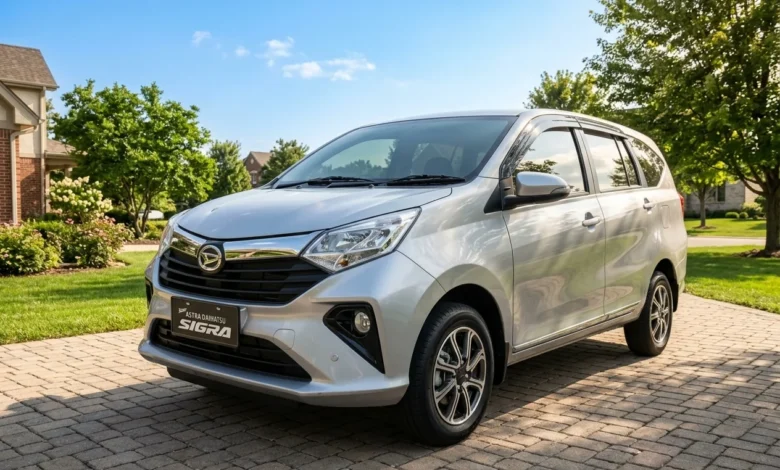
The Indonesian automotive market has witnessed a significant shift toward value-oriented vehicles, particularly within the Low Cost Green Car (LCGC) segment. Among the most sought-after models in the pre-owned sector is the Daihatsu Sigra 1.2, specifically the 2024 model year, which has emerged as a primary contender for families seeking a balance between operational efficiency, seating capacity, and affordability. As economic conditions fluctuate, the secondary market for this multi-purpose vehicle (MPV) has seen a steady increase in demand, driven by its reputation for reliability and low maintenance costs.
Historical Context and Market Positioning
The Daihatsu Sigra, along with its twin, the Toyota Calya, was first introduced in 2016 as a strategic response to the growing need for affordable seven-seater vehicles in Indonesia. Developed under the collaborative efforts of Daihatsu and Toyota, the platform was engineered to maximize cabin space while maintaining a compact footprint suitable for dense urban environments.
By 2024, the Sigra had undergone several iterations and minor refreshes, refining its aesthetic appeal and safety features. The 2024 iteration represents the culmination of these refinements, offering a mature design that caters to modern family needs. Its position in the market is unique; it sits at the entry point of the family vehicle category, effectively bridging the gap between small city cars and more expensive, higher-displacement MPVs. For consumers in the used car market, a 2024 model offers a "like-new" experience with significantly lower depreciation compared to brand-new units, making it an attractive proposition for budget-conscious buyers.
Technical Specifications and Performance Metrics
At the heart of the Sigra 1.2 2024 lies the 3NR-VE engine, a 1,197 cc, four-cylinder unit equipped with Dual VVT-i technology. This powerplant is designed specifically for efficiency and durability. It produces a maximum output of 88 PS at 6,000 rpm and a peak torque of 108 Nm at 4,200 rpm.
In real-world application, these figures translate to adequate performance for urban commuting and periodic intercity travel. Compared to the smaller 1.0-liter variant, the 1.2-liter engine provides a more robust power delivery, which is critical when the vehicle is fully occupied. When traversing inclines or carrying a full load of seven passengers, the 1.2-liter engine manages to maintain momentum with less strain on the transmission, a factor that contributes to the vehicle’s long-term longevity.
The powertrain is coupled with either a five-speed manual transmission or a four-speed automatic transmission. While the manual variant offers a more direct connection and slightly better fuel efficiency for experienced drivers, the automatic version remains a favorite for navigating the notorious traffic congestion found in major Indonesian metropolitan areas like Jakarta.
Fuel Efficiency: The Core Driver of Demand
Fuel consumption remains the primary metric by which potential buyers evaluate the Sigra. Given the rising cost of fuel and the economic pressure on households, the Sigra’s engine architecture is specifically tuned to maximize distance per liter.
Under optimal driving conditions—characterized by steady speeds, consistent tire pressure, and proper maintenance—the Sigra 1.2 is capable of delivering impressive fuel economy figures. In urban settings, users typically report consumption in the range of 13 to 15 kilometers per liter, while highway cruising can extend this to 17 to 19 kilometers per liter.
It is important to note that these figures are influenced by a variety of variables. Factors such as the use of air conditioning, the total weight of passengers and cargo, driving style, and the quality of fuel used all play a role. Automotive analysts suggest that the vehicle’s lightweight chassis design is a significant contributor to its fuel efficiency, as it minimizes the engine load required to achieve cruising speeds.
The Dynamics of the Pre-Owned Market
The secondary market for the Sigra 1.2 2024 has become highly transparent. Due to the high volume of sales for this model, price benchmarks are readily available across various digital platforms and physical dealerships in Jakarta. The depreciation curve for the Sigra is relatively shallow, which is a testament to its sustained popularity.
When inspecting a 2024 unit, prospective buyers are advised to focus on the service history. Because the vehicle is often used for daily commutes or as a fleet vehicle, verifying that the maintenance schedule has been adhered to—specifically oil changes, filter replacements, and cooling system checks—is paramount. Dealers in Jakarta often emphasize the availability of spare parts, which are abundant and affordable, further reducing the total cost of ownership compared to non-LCGC vehicles.
Implications for Consumers and the Automotive Industry
The sustained demand for the Sigra 1.2 2024 reflects a broader trend in the Indonesian automotive landscape: a pragmatic approach to car ownership. The decision to purchase a pre-owned Sigra is often an economic one, aimed at minimizing capital expenditure while maximizing utility.
From an industry perspective, the success of the Sigra line demonstrates the effectiveness of the LCGC program. By incentivizing the production of affordable, fuel-efficient, and locally manufactured vehicles, the government and manufacturers have succeeded in providing reliable mobility to a large segment of the population. The 2024 model, in particular, showcases how continuous iterative improvements can keep an older platform relevant in a rapidly evolving market.
Comparative Analysis: Why the 1.2 Variant?
Market experts frequently advise potential buyers to prioritize the 1.2-liter variant over the 1.0-liter version, even if the price difference is slight. The rationale is multifaceted:
- Power-to-Weight Ratio: The 1.2-liter engine provides a more comfortable driving experience, especially during overtaking maneuvers on highways.
- Resale Value: Historically, the 1.2-liter variants have held their value better than the base 1.0-liter models due to higher demand for the more powerful engine.
- Versatility: The increased torque makes the vehicle more versatile for families who frequently travel with a full cabin or carry heavy loads.
The consensus among mechanics and automotive enthusiasts is that the 3NR-VE engine is a "workhorse." It is relatively simple to maintain, and the parts are standardized across the Daihatsu/Toyota ecosystem, ensuring that repairs can be performed by almost any qualified workshop in the country.
Safety and Comfort Features
While the Sigra is positioned as an affordable vehicle, the 2024 model does not compromise on essential safety features. It is equipped with dual SRS airbags for the front passengers and features an anti-lock braking system (ABS) on higher trims. These features have been instrumental in maintaining the vehicle’s popularity among safety-conscious parents.
Inside, the cabin is designed for functionality. While it utilizes hard plastics to keep costs down, the assembly quality is high, reflecting the manufacturing standards expected of the brand. The air conditioning system is noted for its effectiveness, a critical feature for the tropical climate of Indonesia. The seating configuration is flexible, allowing the rear seats to be folded down to create additional cargo space when the vehicle is not being used to its maximum passenger capacity.
Conclusion: A Strategic Financial Decision
For the average Indonesian family, the choice of a used Sigra 1.2 2024 is rarely just about the vehicle itself; it is about the lifestyle it enables. By providing a reliable, fuel-efficient, and spacious mode of transport at a price point that does not lead to financial overextension, the Sigra remains a cornerstone of the domestic automotive market.
As the market continues to evolve toward electrification and hybrid technologies, the internal combustion engine platforms like the Sigra will likely remain relevant for the foreseeable future due to their sheer practicality and low barrier to entry. For those currently in the market for a used vehicle, the 2024 Sigra 1.2 offers a rare combination of modern design, proven mechanical reliability, and economic sensibility, making it an investment that delivers value long after the initial transaction.
In summary, the 2024 Daihatsu Sigra 1.2 stands as a testament to the longevity of well-engineered, practical transportation. Its role in the market is clear: to serve as a bridge for families moving toward higher levels of mobility, backed by a support network and a reputation that few competitors can match in the current economic climate. Whether for daily school runs, commuting to the office, or weekend trips, the vehicle continues to demonstrate that value and efficiency are the primary drivers of consumer satisfaction in the automotive sector.