Former Vice Minister of Manpower Noel Ebenezer Faces 5-Year Corruption Demand, Expresses Regret and Questions Sentencing Equity

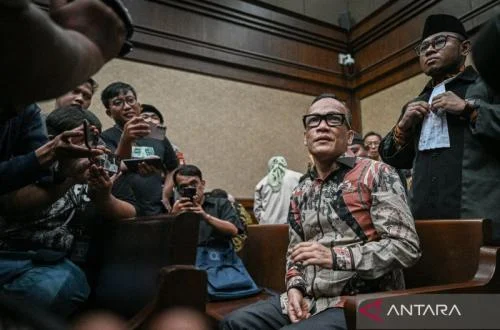
Immanuel "Noel" Ebenezer Gerungan, who served as Vice Minister of Manpower during the 2024-2025 period, has publicly voiced profound regret regarding the five-year prison sentence demanded by prosecutors in his high-profile corruption trial. Following a court session at the Anti-Corruption Court (Tipikor) in Central Jakarta on Monday, Ebenezer’s remarks highlighted a perceived disproportion in sentencing, particularly when comparing his alleged illicit gains to those of co-defendants in the same case. His provocative statement, suggesting he "might as well have corrupted much more" given the minimal difference in proposed penalties, has ignited further debate on judicial fairness and the efficacy of anti-corruption efforts in Indonesia.
Ebenezer is facing charges related to an alleged extortion scheme involving the processing of Occupational Safety and Health (K3) certifications. The prosecution’s demand for a five-year jail term for Ebenezer contrasts sharply with the six-year demand for Irvian Bobby Mahendro Putro, another defendant, who is accused of enjoying significantly larger illicit proceeds. Ebenezer’s legal team is now preparing a robust pleidoi, or defense memorandum, to challenge the prosecution’s demands and influence the judges’ final verdict.
Allegations of Disproportionate Justice and Public Outcry
The core of Ebenezer’s discontent stems from a direct comparison of the alleged sums involved. Prosecutors claim Ebenezer illicitly received approximately IDR 4.43 billion (approximately USD 280,000 at current exchange rates), while Irvian Bobby Mahendro Putro is accused of pocketing a staggering IDR 60.32 billion (approximately USD 3.8 million). The mere one-year difference in the proposed prison sentences for such a vast disparity in alleged corruption amounts has sparked public debate and raised questions about the Indonesian legal system’s approach to punitive measures in corruption cases.
"If that’s the case, do I regret it? Of course, I regret it," Ebenezer stated emphatically after the court session. "I might as well have corrupted as much as possible, for only a one-year difference from the others." This statement, while reflecting his personal frustration, has been widely interpreted as a cynical critique of the justice system, potentially undermining public trust and sending a concerning message about the perceived rewards and risks of large-scale corruption versus smaller illicit activities. Despite this controversial stance, Ebenezer also conveyed the severe personal toll of his detention, describing just three days in custody as "like being in hell," underscoring the psychological burden of his legal ordeal.
Background of the Case: The K3 Certification Extortion Scheme
The charges against Immanuel "Noel" Ebenezer Gerungan are rooted in an alleged widespread extortion operation targeting applicants for Occupational Safety and Health (K3) certifications. K3 certification is a mandatory requirement in Indonesia for various industries and workplaces, designed to ensure the safety and well-being of employees and prevent workplace accidents. These certifications are critical for companies to operate legally and demonstrate compliance with national safety standards. The process typically involves audits, inspections, and adherence to stringent guidelines set by the Ministry of Manpower. The integrity of this certification process is paramount, as any compromise can directly endanger workers’ lives and health.
Ebenezer, along with ten other defendants including Hery Sutanto and Irvian Bobby Mahendro Putro, is accused of orchestrating a systematic scheme to extort money from individuals and companies seeking these vital certifications. The prosecution alleges that the total amount extorted through this scheme reached approximately IDR 6.52 billion (around USD 415,000). The involvement of a high-ranking official like the Vice Minister of Manpower in such a scheme highlights a severe breach of public trust and a grave abuse of authority within a critical regulatory function.
Beyond the alleged extortion, Ebenezer also faces charges of gratification, a form of bribery under Indonesian law where public officials receive gifts or benefits in connection with their positions. Prosecutors allege that he received gratification totaling IDR 3.36 billion (approximately USD 213,000) in cash, in addition to a luxury Ducati motorcycle, from private parties and civil servants. This combination of extortion and gratification charges paints a picture of a multi-faceted corruption enterprise exploiting the power and influence of his office.
Timeline and Chronology of Events
While specific dates for every alleged transaction or event are often revealed during trial proceedings, a general timeline can be inferred based on the information provided and standard legal procedures in Indonesia:
- Period of Alleged Offenses (Prior to/During 2024-2025): The alleged acts of extortion and gratification are believed to have occurred during or leading up to Ebenezer’s tenure as Vice Minister of Manpower (2024-2025). This period would have provided him with the necessary authority and influence to facilitate the alleged schemes.
- Investigation Phase: The investigation into the alleged corruption would have likely been initiated by the Corruption Eradication Commission (KPK), Indonesia’s primary anti-corruption body, following reports or intelligence gathering. High-profile cases involving state officials typically fall under the KPK’s jurisdiction. This phase involves extensive evidence collection, witness interviews, and financial forensics.
- Arrest and Detention: Following the conclusion of the investigative phase and the naming of suspects, arrests were made. Ebenezer’s personal account of "three days in hell" likely refers to an initial period of detention following his arrest.
- Indictment and Commencement of Trial: After gathering sufficient evidence, the prosecution formally indicted Ebenezer and his co-defendants. The trial commenced at the Anti-Corruption Court (Pengadilan Tipikor), a specialized court established to handle corruption cases, ensuring a focused and dedicated legal process for these complex crimes.
- Prosecution’s Demands (Monday’s Session): On the specific Monday mentioned in the article, the prosecution delivered its tuntutan (demands), outlining the charges, presenting their evidence summary, and formally requesting specific prison sentences for each defendant, including the five-year term for Ebenezer and six years for Bobby.
- Defense Preparation (Pleidoi): Following the prosecution’s demands, the defense teams are granted time to prepare their pleidoi (defense memorandum or closing arguments). This is a crucial stage where the defendants and their lawyers present counter-arguments, mitigating factors, and appeals for leniency or acquittal.
- Verdict (Vonis): After reviewing both the prosecution’s demands and the defense’s pleidoi, the panel of judges at the Anti-Corruption Court will deliberate and issue their vonis (verdict), which will include a final judgment on guilt or innocence and, if guilty, the imposed sentence. This decision is subject to appeals to higher courts.
Supporting Data and Legal Framework
The case of Immanuel "Noel" Ebenezer Gerungan falls under Indonesia’s stringent anti-corruption laws, primarily Law No. 31 of 1999 as amended by Law No. 20 of 2001 on the Eradication of Criminal Acts of Corruption (UU Pemberantasan Tindak Pidana Korupsi). This legislation carries severe penalties for offenses such as extortion by public officials (Pasal 12 huruf e) and gratification (Pasal 12B). The penalties can range from a minimum of 4 years to a maximum of 20 years in prison, and in some cases, life imprisonment, along with substantial fines. The specific articles cited in Ebenezer’s indictment would likely pertain to these provisions, reflecting the gravity of the charges.
Indonesia has consistently struggled with corruption, a pervasive issue that has long plagued its public sector and hampered economic development. According to Transparency International’s Corruption Perception Index (CPI), Indonesia has shown some improvements over the years but still faces significant challenges. The CPI scores reflect perceptions of public sector corruption, with Indonesia often hovering in the mid-range globally. High-profile cases involving ministers, governors, and other senior officials frequently make headlines, indicating both the persistence of corruption and the government’s efforts, often led by the KPK, to combat it.
The K3 certification process itself is regulated by various ministerial decrees and government regulations, emphasizing the need for robust oversight. The Ministry of Manpower, through its directorates, is responsible for setting standards, conducting inspections, and ensuring compliance. Any form of corruption within this system not only undermines the regulatory framework but also poses a direct threat to worker safety, making such offenses particularly egregious.
Official Responses and Broader Implications
While direct official responses from the Ministry of Manpower regarding Ebenezer’s case have not been widely publicized, the general stance of the Indonesian government, particularly through the Corruption Eradication Commission (KPK), is one of zero tolerance for corruption. The KPK’s role in investigating and prosecuting such cases is critical in upholding the rule of law and maintaining public trust. The prosecution’s demands, while seemingly lenient to Ebenezer, are part of a legal strategy based on evidence and legal precedents, which may consider various factors including cooperation, restitution, and the specific role of each defendant.
Anti-corruption watchdogs and civil society organizations in Indonesia are likely to closely monitor this case. Statements like Ebenezer’s, questioning the proportionality of sentences, often draw criticism from these groups, who advocate for harsher penalties for corruption, especially for high-ranking officials who betray public trust. Such remarks can be seen as eroding public confidence in the justice system and potentially incentivizing larger-scale corruption if the perceived risk-reward ratio remains skewed.
The implications of this case extend beyond the fate of Immanuel "Noel" Ebenezer Gerungan. It serves as a stark reminder of the ongoing battle against corruption within Indonesia’s bureaucratic structures. When a former Vice Minister is implicated in an extortion scheme related to essential public services like K3 certification, it raises serious questions about systemic vulnerabilities and the effectiveness of internal controls.
Firstly, the case highlights the need for continuous reform and transparency in regulatory processes, particularly those involving certifications and permits, which are often fertile ground for illicit activities. Strengthening oversight mechanisms, streamlining application procedures, and leveraging technology to reduce human interaction can mitigate corruption risks.
Secondly, the public’s perception of justice is severely impacted by perceived sentencing disparities. If individuals believe that larger acts of corruption receive only marginally harsher penalties than smaller ones, it can foster cynicism and diminish trust in the judiciary and the broader anti-corruption drive. This underscores the importance for judges to articulate their sentencing rationales clearly and consistently, taking into account the full scope of harm caused by corruption, including the erosion of public trust and the damage to institutional integrity, not just the monetary value.
Finally, the case reinforces the critical role of independent anti-corruption bodies like the KPK. Their continued vigilance and capacity to investigate and prosecute high-ranking officials, regardless of their political connections, are indispensable for safeguarding good governance and promoting accountability in Indonesia. The outcome of Ebenezer’s trial will undoubtedly be a closely watched event, offering insights into the evolving landscape of anti-corruption efforts and the administration of justice in the nation. His pleidoi and the subsequent judicial verdict will not only determine his personal fate but also contribute to the ongoing narrative of Indonesia’s commitment to eradicating corruption.