Tragic Loss of Renowned Cambridge Scientist Dr. Marta Shahbazi in Spanish Train Disaster

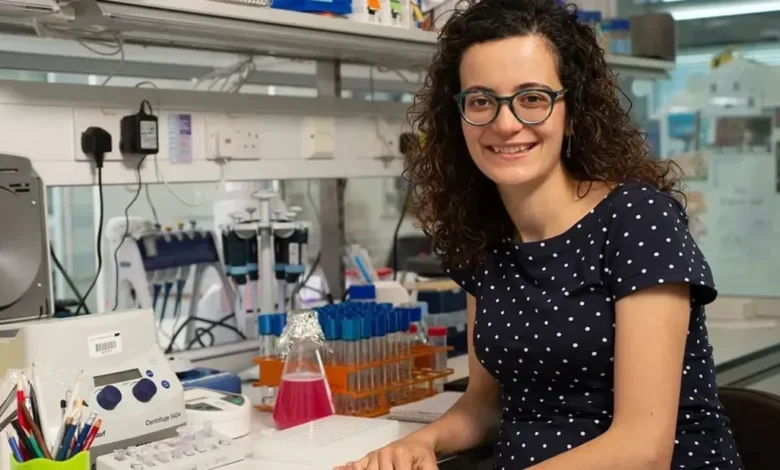
The global scientific community is mourning the untimely passing of Dr. Marta Shahbazi, a brilliant and pioneering researcher from the University of Cambridge, who was among the 69 victims of a devastating train collision near Urda, south of Madrid, on October 28. Dr. Shahbazi, a 41-year-old mother of two, was traveling to Andalusia to receive a prestigious honor from the Spanish Society for Developmental Biology for her groundbreaking contributions to the understanding of early human development. Her death marks a significant loss for the field of embryology and molecular biology, leaving behind a legacy of curiosity, dedication, and transformative research.
A Career Defined by Excellence and Innovation
Dr. Marta Shahbazi was widely recognized as a rising star in the international scientific arena. Based at the Medical Research Council (MRC) Laboratory of Molecular Biology (LMB) in Cambridge, she served as an affiliated associate professor, leading a team of researchers focused on the complexities of human embryonic development. Her work, which often pushed the boundaries of what is known about the first few days of life, was characterized by rigorous methodology and a profound commitment to ethical inquiry.
Her academic journey began in her native Spain, where she completed her undergraduate studies in Biology at a public university in Madrid. Following her graduation, she moved to the United Kingdom to pursue post-doctoral research at the University of Cambridge, a move that would eventually establish her as a leading voice in developmental biology. Colleagues at the LMB describe her as not only a formidable scientist but also a mentor and an inspiration to younger researchers, particularly those balancing the demanding nature of high-level academia with the responsibilities of motherhood.
Chronology of a Fateful Journey
The events of October 28 began with the promise of professional recognition. Dr. Shahbazi was en route to El Rompido, Andalusia, where she was scheduled to receive an award for her scientific excellence. Her aunt, María Jose Alonso, a distinguished professor of Biopharmaceutics and Pharmaceutical Technology at the University of Santiago de Compostela, later revealed that the family had initially discussed traveling together by car. However, Dr. Shahbazi, ever independent and eager to maintain her schedule, opted for the train.
"Her family was in Madrid, and they could have traveled together by car, but she insisted they stay," Alonso recounted.
The collision occurred near Urda, a town situated in the province of Toledo. Emergency services were deployed immediately, but the scale of the disaster, which resulted in 69 fatalities, quickly overwhelmed local infrastructure. Upon receiving the initial reports of the accident, the Shahbazi family rushed to the Madrid station, enduring hours of agonizing uncertainty before receiving confirmation that her body had been identified. The funeral services, held shortly after in Madrid, drew hundreds of friends, colleagues, and members of the global scientific diaspora, reflecting the deep impact Dr. Shahbazi had on those around her.
Scientific Contributions and Academic Impact
To understand the magnitude of the loss, one must examine the specific nature of Dr. Shahbazi’s research. In recent years, her team at the LMB-Cambridge had developed innovative models to study the implantation of human embryos. These models have been instrumental in allowing scientists to observe developmental milestones that were previously impossible to study due to technical and ethical constraints.
Her research provided critical insights into how cells organize themselves during the early stages of life. By bridging the gap between basic laboratory science and clinical applications, her work had the potential to influence treatments for reproductive health and shed light on the origins of developmental disorders. The Spanish Society for Developmental Biology had selected her for the award specifically to honor this high-impact research, which has been cited extensively in leading academic journals worldwide.
Official Responses and Institutional Mourning
The reaction from the scientific establishment has been one of profound sorrow. The MRC Laboratory of Molecular Biology released a formal statement acknowledging her as an "inspirational, talented, and dedicated scientist." The laboratory emphasized that her death was not only a personal tragedy for her family but a massive blow to the institution’s research mission.
"Marta was a role model in every sense—as a scientist, a leader, and a mother," the statement read. "She held the title of ‘scientist and mother’ as a badge of honor, challenging the outdated notion that one must choose between a rigorous research career and raising a family."
Dr. Alonso, who played a formative role in Dr. Shahbazi’s early interest in science, reflected on her niece’s character. "She was a person of immense energy and light," Alonso said. "Even as a child, she possessed an extraordinary determination. We used to practice her conference speeches together. She had a hunger for knowledge that was rare even among the most gifted students."
Contextualizing the Rail Tragedy
The crash near Urda serves as a stark reminder of the vulnerabilities inherent in public transport infrastructure. While Spain maintains one of the most advanced high-speed rail networks in Europe, incidents of this magnitude—though rare—underscore the critical importance of safety protocols, signaling systems, and track maintenance.
Transportation authorities in Spain have launched a comprehensive investigation into the causes of the collision. Preliminary reports suggest that technical failures, coupled with human factors, are being examined to determine how two trains came to occupy the same section of track. The incident has prompted calls for a national review of railway safety management, with transport unions and the Spanish government pledging transparency throughout the investigative process.
The Broader Implications for the Field
The death of a scientist of Dr. Shahbazi’s caliber creates a void in the collaborative ecosystem of developmental biology. Research projects of the scale and complexity she led often require years of continuity and specific leadership. The LMB-Cambridge is expected to form a committee to ensure that the ongoing studies under her purview continue with the integrity and vision she established.
Furthermore, her passing has sparked a conversation regarding the support systems available for women in STEM (Science, Technology, Engineering, and Mathematics). Dr. Shahbazi was vocal about the structural challenges faced by mothers in academia. Her success and her candid approach to the difficulties of the field served as a blueprint for many junior researchers. Her colleagues hope that her legacy will not only be preserved through her scientific papers but also through a continued commitment to the inclusive and supportive research environment she championed.
Remembering a Life of Purpose
Beyond the laboratory, Dr. Shahbazi was remembered as a woman of deep connections. The hundreds of people who attended her funeral—traveling from laboratories in the United States, across Europe, and beyond—attested to her ability to build community in an often competitive field.
"She was the most friendly person you could imagine," her aunt noted. "She was a light for all of us."
As the investigation into the Urda tragedy continues, the focus of the public and the scientific community remains on honoring the lives lost. For Dr. Marta Shahbazi, the focus will remain on the promise of her work—a body of research that continues to offer hope for future breakthroughs in understanding the very beginning of human life. While her life was cut short by a senseless accident, the foundation she laid in her 41 years remains a pillar upon which future generations of scientists will build.
The scientific community in Cambridge and Madrid continues to hold vigils and memorial services, ensuring that the memory of a woman who dedicated her life to the betterment of humanity through knowledge is never lost. The tragedy serves as a solemn reminder of the fragility of life, even for those whose minds are constantly pushing toward the future.