8 Jenis Motif Batik Cirebon yang Bersejarah dan Memikat Hati sebagai Warisan Budaya Nasional

Cirebon, a city located on the northern coast of West Java, serves as a significant intersection of cultures that has birthed one of Indonesia’s most distinctive textile traditions: Cirebon Batik. Unlike the courtly traditions of Surakarta and Yogyakarta, which often adhere to strict palace protocols, Cirebon Batik—particularly the Trusmi variety—reflects a unique synthesis of Javanese, Chinese, and Islamic artistic influences. This fusion is a direct result of Cirebon’s history as a prominent maritime trade hub and a center for the spread of Islam in the 15th century, facilitated by figures such as Sunan Gunung Jati. Today, this craft remains a vital pillar of the regional economy and a protected intangible cultural heritage.
The Duality of Cirebon Batik: Keraton and Pesisiran
The evolution of Cirebon Batik is categorized into two primary lineages: Batik Keraton (Palace Batik) and Batik Pesisiran (Coastal Batik). Batik Keraton is deeply rooted in the traditions of the Kasepuhan and Kanoman palaces. Historically, these textiles were reserved for royalty and court officials. They are characterized by a restrained color palette, primarily utilizing deep earth tones such as dark brown, indigo, black, and maroon. The structural composition of these pieces often follows a rigid, three-tiered horizontal layout, representing the philosophical balance between the heavens, the earth, and the human realm.
Conversely, Batik Pesisiran—most notably the Trusmi style—breaks away from the rigid constraints of the palace. Due to the influence of external traders, particularly from China, these textiles feature vibrant, high-contrast colors including bright reds, greens, blues, and yellows. The production process often involves multiple stages of dyeing to achieve depth and complex color gradients, a technique that has become a signature of Cirebon’s coastal artisans.
Historical Context and Evolution
The history of batik in Cirebon is intrinsically linked to the arrival of Chinese merchants and the establishment of the Cirebon Sultanate. Historical records suggest that the technique was refined through the interaction between local artisans and visiting traders who brought with them porcelain patterns and silk motifs. By the 19th century, the village of Trusmi had established itself as the epicenter of this craft. According to local historical accounts, the name "Trusmi" is derived from the Javanese words "terus" (continuous) and "semi" (blossoming), symbolizing the perpetual growth of the craft.
In recent decades, the Indonesian government has moved to protect these designs through Geographical Indication (GI) certifications. This legal framework ensures that the traditional techniques and motifs are preserved against industrial imitation, maintaining the livelihood of thousands of artisans in the Cirebon regency.

Detailed Analysis of Eight Iconic Motifs
The visual language of Cirebon Batik is expansive, though eight specific motifs are widely recognized for their cultural and historical significance.
1. Mega Mendung
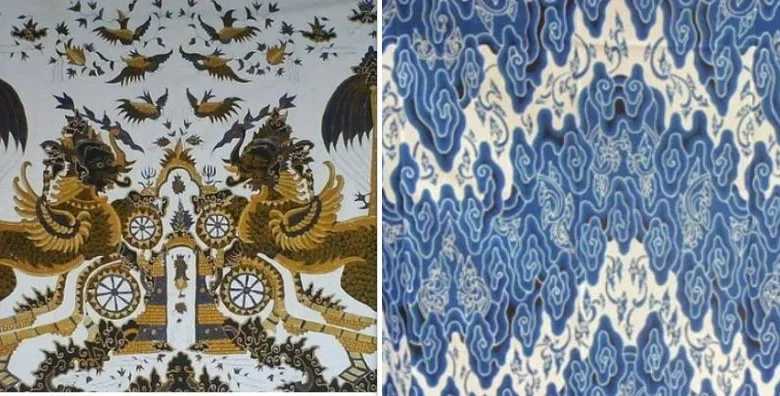
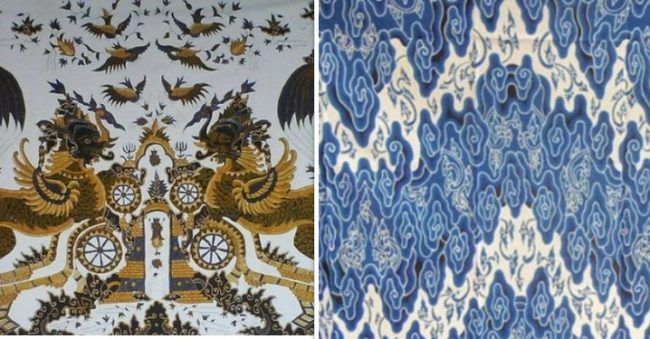
The Mega Mendung is undoubtedly the most recognizable symbol of Cirebon. It depicts stylized, layered clouds with pointed, triangular edges. The motif is a direct manifestation of Chinese artistic influence, specifically representing the clouds found in traditional Chinese paintings. Symbolically, the Mega Mendung represents patience, tranquility, and the ability to "shade" or protect those in need. It is often rendered in varying shades of a single color to denote the intensity of the sky.
2. Singa Barong
The Singa Barong motif is a testament to the syncretism of local beliefs. It features a mythical creature, the Singa Barong, which is a composite of a lion, a dragon, and a bird. This motif is frequently observed in the architectural carvings of the Kasepuhan Palace. In batik form, it is often surrounded by lush, naturalistic illustrations of flora and fauna, reflecting the harmony between the animal kingdom and the environment.

3. Paksinaga Liman
Similar to the Singa Barong, the Paksinaga Liman is a complex zoomorphic design. It combines the Paksi (Garuda/Bird), Naga (Dragon/Serpent), and Liman (Elephant). This motif is modeled after the royal chariot of the Cirebon sultans. The design is historically significant as it symbolizes the unification of three cultural powers: the influence of Islamic, Hindu, and Chinese traditions. Typically, it is presented in white and brown, highlighting its status as a formal, court-inspired pattern.
4. Taman Teratai
The Lotus (Teratai) holds profound spiritual significance in Cirebon, representing purity and enlightenment. The Taman Teratai motif illustrates lotus flowers blooming within a pond, often intertwined with aquatic life. This motif is widely favored for its aesthetic fluidity and is often used in textiles intended for ceremonial occasions.
5. Patran Keris
The Patran Keris motif is categorized by its classic, austere appearance. It primarily features the silhouette of the keris (the traditional Indonesian dagger), which is considered a sacred object of protection. Unlike more decorative motifs, the Patran Keris is marked by its minimalist, darker color scheme, emphasizing the strength and historical gravity associated with the weapon.

6. Wadasan
Wadasan, derived from the word "wadas" (rock or stone), captures the essence of the natural landscape. The motif incorporates detailed drawings of leaves, twigs, and geological formations. It represents the grounding influence of the earth and the complexity of nature. While historically confined to palace colors, modern adaptations have introduced a broader spectrum of pigments to suit contemporary fashion trends.
7. Sawat Pengantin
"Sawat" means wing in the local dialect. This motif is integral to wedding ceremonies in Cirebon. The design depicts a pair of stylized wings, which serve as a protective talisman for the newlyweds. It symbolizes the couple’s journey into a new life, with the wings acting as a guardian for their future union.
8. Ciwaringin Bangau
Originating from the Ciwaringin region, this motif features the crane (Bangau). It emerged as a response to the colonial era, symbolizing the resilience and loyalty of the local population to their land. The crane is often depicted alongside floral patterns or subtle references to the Mega Mendung, creating a narrative of endurance and beauty.

Economic and Cultural Implications
The batik industry in Cirebon serves as a primary economic driver for the region. According to recent data from the Department of Trade and Industry, the Trusmi batik cluster contributes significantly to the regional GDP, with thousands of households involved in the supply chain—from dyeing and wax-resist application to marketing and distribution.
The shift toward sustainable production has also become a critical area of focus. Many artisans are transitioning to natural dyes, such as those derived from mahogany bark, indigo plants, and teak leaves, to meet the growing global demand for eco-friendly fashion. This transition not only enhances the value of the product in the international market but also preserves the environmental integrity of the region.
Furthermore, the integration of these traditional motifs into modern fashion has allowed Cirebon Batik to remain relevant. Fashion designers have increasingly utilized these patterns in haute couture, demonstrating that the historical motifs—some of which are centuries old—possess a timeless quality that transcends shifting trends.

Conclusion and Future Outlook
The preservation of Cirebon Batik is not merely a matter of maintaining aesthetic standards; it is an effort to protect the historical narrative of the Javanese northern coast. As Cirebon continues to modernize, the challenge lies in balancing commercial demand with the preservation of artisanal integrity. By continuing to document these eight motifs and the techniques associated with them, local authorities and cultural foundations ensure that the legacy of Sunan Gunung Jati and the early coastal artisans remains a vibrant, evolving part of Indonesia’s national identity. The future of the industry depends on the continued appreciation of these intricate patterns, not just as textiles, but as essential documents of cultural history.